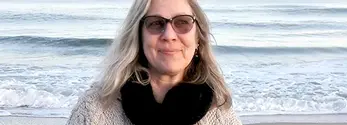
Ivar Dale is a Norwegian human rights advocate who has spent twenty years working on Russia, Ukraine, the Caucasus and Central Asia. In recent years, much of his work at the Norwegian Helsinki Committee (NHC) has focused on Turkmenistan — one of the most closed countries in the world. We spoke with him about how power works in Turkmenistan, why so little is said about the country in the West, and what lies behind the years of silence surrounding the fate of people who have disappeared in Turkmen prisons.
“In 20 years of working in the region, I’ve been expelled, denied visas, ignored”
— To begin with, please tell us a little about yourself and what you do today. How did you come to speak Russian so well?
I learned Russian and first went to Russia back in 1999 — I studied in St Petersburg. After that, I travelled around Russia for several years, then worked extensively in the North Caucasus, followed by Georgia, Armenia and Azerbaijan — in short, across the post-Soviet space. For a while I worked for the Norwegian immigration service, processing asylum applications.
Then I headed the Norwegian Helsinki Committee’s office in Bishkek for two and a half years — until the Kyrgyz authorities shut it down and expelled me from the country. I returned briefly to Norway and then went back to Central Asia, this time to Almaty, where we reopened the office; it still exists today. I later spent several years in Geneva, working there for the Norwegian Helsinki Committee, including on Turkmenistan. After that I lived in Kyiv, and in the summer of 2021 I returned to Norway. Altogether, I have been working in this field for twenty years.

Ukraine, Luhansk Region. Photo: From Ivar Dale’s personal archive.
— How did you come to work on human rights and authoritarian states?
— It really began with learning Russian and my first trips to Russia and across the post-Soviet space in the late 1990s — that was when I became drawn into the subject, and one thing led to another: refugees, Kyrgyzstan, Central Asia.
— What is the Norwegian Helsinki Committee, and how would you describe the organization’s mission to someone who has never heard of it?
— It is a human rights organisation that has traditionally worked in OSCE countries. It was founded in 1977 and originally focused on Eastern Europe and the Soviet Union. Today our work is broader, but our greatest expertise is still on Russia, Ukraine, Belarus, Georgia and Central Asia.
We do monitoring and write reports — for example, we prepare submissions for the UN Universal Periodic Review, including on Turkmenistan. We also do advocacy: we work to ensure that specific cases are raised at international hearings. And finally, an important part of our work is supporting projects: we have a small-grants programme for Central Asia, as well as projects with partners in Ukraine, the Caucasus and other regions.
We support local NGOs and activists, and we do not simply support them — we work together with them. Human Rights Watch, for example, does not have a programme that financially supports local organizations: they write reports and cooperate with various groups, but they do not provide grants. Organizations such as the Open Society Foundations, by contrast, provide funding but do not produce their own reports. We do both, just on a smaller scale: we are a small organization with only 20–25 staff members, working across a wide range of issues.
We have only one office abroad, in Almaty. As for the history: the very first Helsinki committee, the Moscow Helsinki Group, was established, I believe, in 1976, shortly after the signing of the Helsinki Final Act, an agreement between Western countries and the Soviet Union that included, among other things, human rights and democracy. Helsinki committees then began to appear in different countries — they are separate, independent organizations: the Swedish Helsinki Committee (now Civil Rights Defenders), the Norwegian, Dutch and Albanian committees, and so on. There was also the International Helsinki Federation, an umbrella organization that coordinated the work of the various committees, but it was closed down around twenty years ago.

Geneva, United Nations Office. Photo: Jeff Vize
— What interests or motivates you to devote so much time to countries that most people know almost nothing about?
— I have always been interested in seeing a country with my own eyes. I feel that I understand the situation much better if I have at least some personal contact with it. I suppose that is part of the motivation: a constant desire to understand what is really happening rather than settle for the official picture.
Turkmenistan is the most closed country in the region!
— What are the biggest difficulties when trying to understand what is happening in a country like Turkmenistan, where information is so tightly controlled?
— Working on countries like Turkmenistan is difficult precisely because information is so restricted. Kyrgyzstan, where I worked, also had an authoritarian regime — I was eventually deported. Then the 2010 revolution happened there, I immediately returned to work with local human rights defenders, and we did a great deal of work in Jalal-Abad. There were clashes between Uzbeks and Kyrgyz at the time, and those were among the hardest days of my entire professional career.
Uzbekistan is an illustrative example: after the Andijan events, human rights defenders simply could not get into the country. I went once as a tourist, wrote an article about it, and after that I stopped getting visas — until Islam Karimov died. When he died, the new authorities unexpectedly invited several human rights defenders into the country themselves and held a human rights forum, a kind of showcase visit. We were, of course, sceptical, but the fact remains: a country that had been completely closed to foreign human rights organizations and journalists for eleven years suddenly opened up. Part of it was PR — Uzbekistan needed to attract investors. But there were real changes as well: people travel there now, and the situation is fundamentally different from what it was ten years ago, although it is still not a democracy.
Nothing similar has happened in Turkmenistan. The country remains far more isolated than Uzbekistan. There is no reliable official information. You have to rely on sources inside the country and on open-source information, and that is extremely difficult and slow.
The basis of Turkmen diplomacy is personal fear
— Have you ever been to Turkmenistan yourself, or met people from there? How do such encounters affect your work?
— No, I have never been to Turkmenistan itself. I once tried to get a visa and did everything officially — I was living in Bishkek at the time, called the Turkmen embassy and introduced myself as an employee of a human rights organization. They told me that such matters could not be handled over the phone and gave me the location of the nearest embassy — in another country. So I bought a ticket and flew there: I went in person and said that I wanted to apply for a visa as a representative of the Norwegian Helsinki Committee. They asked me to come back in a week. A week later — still nothing. Three weeks later — the same. And when I called for the fourth time, they told me there was no need to call again because they had my contact details, and added that too many foreigners had been coming to Turkmenistan lately anyway. They never called me back. It was a polite way of refusing without saying so directly.
I have thought about it a lot since then: even if I had been given a visa, going there as an ordinary tourist and simply ‘walking around’ with a guide would not really solve anything either. The regime would quickly use such a visit for propaganda purposes: they would write that human rights advocates from Norway had come, checked everything and left satisfied, when in reality you had not been able to speak freely with anyone and had, at most, attended a couple of official meetings. If you go, you have to do it seriously, together with other organizations, not simply on your own. Now, to be honest, after this interview my chances will become even slimmer — I am sure the Turkmen authorities closely monitor who is working on this issue.
— What is it like to work on countries such as Turkmenistan, where access to information is difficult and people risk repression if they speak openly?
— It is difficult. People inside the country who are willing to share information have to exercise enormous caution, and they badly need support from outside. What does make it out often comes through a handful of small, niche outlets — such as Turkmen.news or Chronicles of Turkmenistan. They are not the New York Times, but someone has to write about it, otherwise no one will know anything about this country at all.
Turkmenistan is of interest to only two groups — the oil and gas business and human rights advocates
— Turkmenistan is often described as one of the most closed countries in the world. If you had to explain the country to someone who had never heard of it, what is the most important thing they should understand?
— First of all, the scale of its isolation. We are talking about a country with a population of only five to six million people, where there are no independent media, no free elections, and personal power is concentrated in the hands of one family. In terms of isolation, Turkmenistan surpasses even its neighbours in the region — Uzbekistan, by comparison, looks far more open.
— Why does Turkmenistan so rarely become a focus of media attention compared with, for example, Russia, Iran or North Korea, despite the severe repression we know about?
— I do not know exactly. I suppose it is partly a matter of the scale of the issues. Iran has a decades-long confrontation with the United States and the question of nuclear weapons — objectively, that is a more significant issue for global politics. Turkmenistan, on the other hand, is genuinely of interest to only two groups: those who want to do business there — meaning oil and gas companies — and human rights advocates who want to understand what is happening there. Almost no one else is interested in the country, and that is rather sad.
The Berdimuhamedov family dynasty is a political façade
— Your latest report describes how power passed from Gurbanguly Berdimuhamedov to his son Serdar. How does this kind of family rule work in practice?
— I do not think this regime ever seriously intended to carry out reforms. At the very beginning, when Turkmenbashi Saparmurat Niyazov died and Gurbanguly Berdimuhamedov came to power, many people were briefly misled by the hope that things would now be different — Berdimuhamedov even spoke at Western universities and talked about the changes that were needed. But over time things only became worse. Then, in effect, he put his own son Serdar on the throne — creating a family dynasty of presidents.
I think Serdar is largely a figurehead, while in reality the country is still run by his father — perhaps together with a narrow circle of associates about whom we know almost nothing. From time to time, this regime makes fairly absurd, almost clownish decisions on very serious matters — and for a while it can even seem funny, until you remember that real human lives are behind it all.
— The regime holds elections and has formal institutions. How large is the gap between the country’s official image and its political reality?
— Free elections simply do not exist there. Formal institutions exist, but there is nothing behind them. Here again I think of Uzbekistan: after Karimov’s death, the country opened up for a while — human rights defenders were invited in, and NGOs and journalists were allowed in after eleven years of complete closure. Part of it was certainly PR, but some real changes did take place: today people see Uzbekistan roughly the way they see Kazakhstan — as a post-Soviet authoritarian country, but one that is more or less integrated into normal international relations.
Against that background, Turkmenistan has not changed at all: the gap between the official picture and reality remains as enormous as it was twenty years ago. But I would not say that change is impossible in principle — it is simply unrealistic to expect Turkmenistan suddenly to become a full-fledged democracy overnight.

Bishkek, 2024. Photo: Lasse Thomassen
“Prove They Are Alive!”
— Which human rights violations in Turkmenistan do you think are the most underestimated or least known abroad?
— Probably enforced disappearances — the issue addressed by the ‘Prove They Are Alive!’ campaign. The relatives of people who were once thrown into prison spend years not knowing whether their loved ones are alive or dead. The Norwegian Helsinki Committee has been involved in this campaign with its partners from the very beginning — in my view, it is a very effective format, because when you talk about a country like Turkmenistan, people often find it difficult to understand what exactly you mean. But when you explain that someone has abducted your son, husband or daughter and you still do not know whether they are alive, that is something absolutely anyone can understand.
It would cost the authorities nothing simply to tell the truth — to acknowledge if something went wrong under the previous regime, because Turkmenbashi is no longer alive and they could blame it all on him while at the same time presenting themselves as a more modern, reform-minded government. Relatives would have the chance to come, find the grave and say goodbye. But they do not do this, and that in itself says a great deal about the nature of the regime. At diplomatic hearings, when specific lists of dozens of missing people are raised, the Turkmen side either does not respond at all or gets lost in generalities and statistics — very much in the Soviet style.
— Your report describes restrictions on freedom of speech, freedom of movement and access to information. How does this affect the everyday lives of ordinary people?
There are simply no independent media in Turkmenistan — no free newspapers and no independent websites. There are no free elections. Name almost any issue connected with human rights, and there will almost certainly be serious violations in that area in Turkmenistan. Practically all international human rights conventions are violated there in one way or another, across the board.
— Several organizations have documented cases of enforced disappearances and say there are political prisoners in Turkmenistan. What do we actually know about the scale of this phenomenon today?
— Very little, and that in itself is revealing. Human rights organizations maintain lists containing dozens of names of people whose fate is unknown. At the official level, the Turkmen side either ignores these lists or calls them an invention of human rights advocates. Unfortunately, there is no verified information on most of the cases — the authorities refuse to respond even to direct written requests that we have sent both by email and by fax. I have personally met Turkmen diplomats in Geneva, but they apparently do not have the authority to provide substantive answers to questions of this kind.
“Civil society in Turkmenistan is, in effect, underground”
— Turkmenistan has enormous natural gas reserves. How do energy policy and the economic interests of the rest of the world affect the willingness to criticise the regime? And what influence does Russia have here?
— As long as it is mainly about gas and oil, big business and some Western governments simply have little incentive to press human rights issues — it gets in the way of deals. As for Russia, there is a great deal I do not understand myself: Turkmenistan was one of the first countries Putin visited after the full-scale invasion of Ukraine, and senior Russian officials, such as Valentina Matviyenko, visit regularly. I have a sense that there is some kind of undisclosed arrangement between Ashgabat and Moscow: Russia presumably benefits from Turkmenistan not becoming a major exporter of gas to Europe, because that would create competition for Russian gas. But I do not know exactly how these arrangements work — that is really a question for experts on energy and on Russia.
— Your report is also critical of international actors. Do you think the EU and Western countries have been too cautious in their relations with Turkmenistan?
— Yes, probably. It seems to me that the international community’s interest in human rights in Turkmenistan was greater several years ago — during the so-called ‘coup’, when opposition figures were imprisoned and there was an attempt, ultimately unsuccessful, to invoke the OSCE Moscow Mechanism — than it is now. Perhaps it is time to raise the issue again.
Civil society would like to create an open public platform in Europe for discussing the human rights situation in Turkmenistan — not only for governments, but also for the broader public, for people who are generally interested in international relations. If you ask an ordinary person in Norway what they know about Turkmenistan, at best they will remember some bizarre story rather than what is actually happening there. Turkmen officials could even be invited to such a platform and allowed to present the official position — the question is whether they would come, and whether they would do more than offer general statements that everything in the country is wonderful.

Participants in a briefing on human rights violations in Turkmenistan. From left to right: Ivar Dale, Tatyana Shikhmuradova, Hugh Williamson, Director of the Europe and Central Asia Division at Human Rights Watch, and Yuri Dzhibladze, President of the autonomous non-profit organization Center for the Development of Democracy and Human Rights. June 21, 2019, Geneva.
“The absurdity of everything happening in Turkmenistan should not distract from the real problems”
— If you had to choose one thing that politicians, journalists and the public around the world should understand about Turkmenistan, what would it be?
— It is important not to judge Turkmenistan by the amusing, absurd stories that occasionally surface in the world media — such as golden statues of Alabay dogs — but to dig deeper and understand what is really happening there. I always find it sad when one of these bizarre stories travels around the world while almost no one writes about the systemic problems that have remained unchanged for more than twenty years. This country should not be treated as a joke — it should be taken just as seriously as any other country.
— And one final question: why is Turkmenistan not subjected to serious sanctions or criticism — for all these absurd laws that violate human rights — as, for example, North Korea is?
— To be honest, I do not know. Partly, it is because very few people know much about Turkmenistan, and it is politically difficult to impose sanctions on a country that almost no one has heard of. This is already a question of high politics: for some reason, it is considered shameful to be friends and cooperate with some authoritarian regimes, but not with others — Saudi Arabia, for example — even though in essence they are no better. These are genuine double standards, and they too need to be challenged.